Clovelly to Hartland Quay, Devon, 11 miles 1500ft elevation (South West Coast Path)
November was in full flow. And as people added clothes to their bodies, the trees shed theirs.
Embracing change is vital, there’s gold to be found in making change. It’s important we are open to it. The gold of the leaves in autumnal transition reminds me of the value of change. Change isn’t easy, often necessary, and it’s where greatest growth happens. Autumn precedes winter, winder precedes spring, and Spring leads to summer. That’s how I see change, I humanise the seasons. An alternative to the excellent Kubler Ross change curve which was originally designed around managing grief.
Niky dropped me at Clovelly visitor centre at the top of the village. The initial route took me along 2 or 3 miles of earthy woodland wrapped into the top of the cliff. The leaf drenched path was peppered with kissing gates, every 500 metres or so. Whenever myself and Niky go for walks near our home we view a kissing gate as an opportunity for a cheeky peck. We have an unwritten rule of whoever gets to the gate first takes up a kissing position. Call me a romantic eh? Often the first one there.
As the path climbed to around 1500 ft and I worked hard to avoid sneaky protruding roots ready to lasso my feet, I could see light ahead and hear the ocean seeping through the tree gaps. I eventually plateaued to the sight of a beautiful almost oriental-like viewing platform, known as The Angel’s Wings.
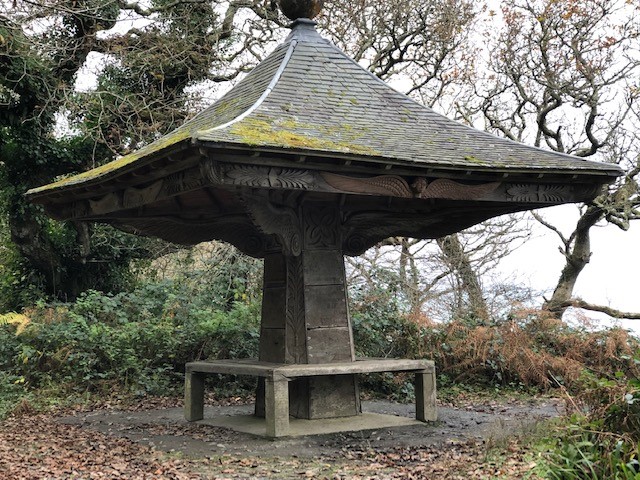
The shelter was built in the 19th century by Sir James Hamlyn-Williams of Clovelly. The ‘Angel’ name came from the ornate angel’s wings carved into the the roof footings. As I sat there I noticed that many people had rough-carved (and dated) messages of affection into the wood over the last 200 years. Sir James apparently built the shelter so he could look out on the home of his daughter, Lady Chichester at Youlston, across Bideford Bay, and what a view it is! I understand Sir James, for many years was an MP representing Carmarthen, West Wales. (I like him…Welsh bias kicking in).
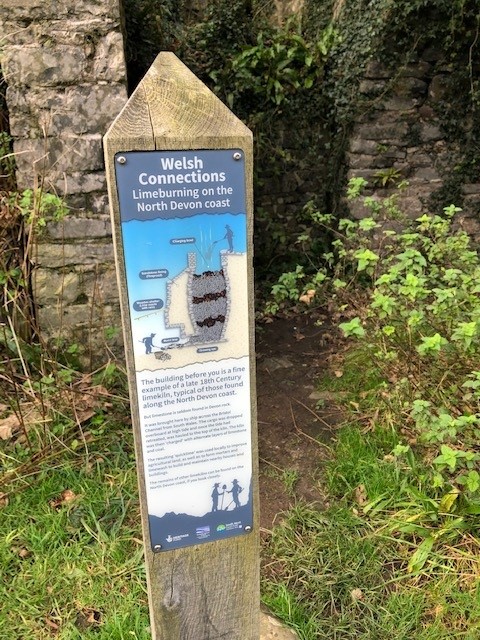
I descended most of the 1000 feet down to Mouth Mill, a sharp valley bottoming out at a pebble cove. There I noticed some old remains of buildings. I’ve no idea how anyone would even get there to build a building, it’s testimony to the generations before me. I reflected that we could learn from resilience and industry of the past. These aged constructions were Lime Kilns. This is where limestone was burned with charcoal to produce quicklime an essential ingredient at the time to improve yield on farmland. It’s all to do with neutralising acids in soil. And of course much of the limestone came from South Wales. Making me wonder if Sir James had something to do with it?
Pulling out of Mouth Mill towards the top of the valley onto Bursdon Moor I was presented with ancient celtic burial sites. They are usually recognised as large 10ft wide mounds (or barrows) with a surrounding ditch. Many of the sites had been plundered for relics especially in the 18th and 19th century. You can tell because the mounds had been dug out. It felt disrespectful especially as they were dating back to 1500 BC and were the resting place of tribal leaders, positioned to look out over the land and ocean. Right on the edge.
That is the story of Celts. They lived on the edge, embracing the elements and aligning their lives by water, sea, sky and fire and over time took on the principles of Christianity brought by the Celtic Saints. It resonates with me as a Cornish-born Welshman, even the languages of Cornwall and Wales carry an ethereal Celtic spirit. Both heavenly and earthly.
It’s hard to describe the harsh majesty of the scenery, both breathtaking and sobering. It reminded me of CS Lewis’ description of Aslan… not tame. As I straddled the cliff I could see hewn into stone some plaques dotted with remembrance poppies paying tribute to lives lost. Tributes paid to the torpedoed WW1 hospital ship HMS Glenart Castle with the loss of 153 lives. Also not far away a memorial for the loss of 10 US airmen returning from a mission in their WW2 B-24 Liberator Bomber crashing into the cliff in dense fog.
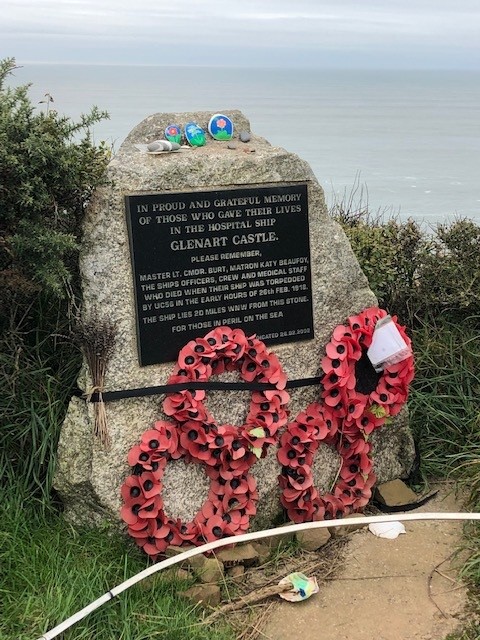
I stopped and said a prayer of thankfulness. This sacrifice will never be lost on me.
I was now within sight of Hartland point. It’s hard to describe but this is where the North facing aspects of the path looking out onto beautiful calming Bideford bay turn 90 degrees to the West facing wild Atlantic. My surfer’s radar was up! I could smell and taste a saltier depth to the air. If you listened carefully you could hear a rumble in the distance. The sea state was changing.
It was also clear that I was coming into an area of ‘watching’. Over the next 15 miles there are (not so) little giveaway signs that MI6 are busy checking the world’s conversations. There was even a chap walking half a mile in front of me. I did wonder if he was a spy. Then to my right just after Shipload Bay I spotted what I decided to call ‘God’s Golf Ball‘ a radar station originally linked to Bletchely Park and Enigma code-breaking work in WW2. I understand it’s called something else by the locals. I’ll say no more there.
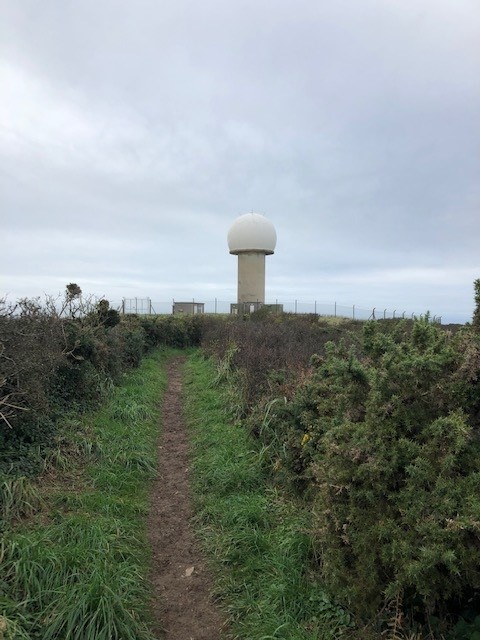
I rounded God’s tee shot to see a that a mile or so ahead was Hartland point.
Now for those who read these blogs you’ll be aware that Niky Von-Wifey likes to pop out of hedgerows and surprise me during my walks. Which when you’re 1500 ft up could be construed as a little dangerous. I haven’t mentioned that bit to her yet. As I was heading to Hartland point (on a thin path) I clocked in the distance the roof of our old camper van, parked near a field.
I knew it! She’s hiding somewhere! I’m ready!
With my wits about me I kept going. I felt a bit like Corporal Lewis in Dad’s army – always aware. I could still see the Spy-walker-chap about 500 m in front. He disappeared round a corner. It was then I heard the commotion. ‘I’m sure that’s Niky’s voice?’. I thought.
A few minutes later there she was… walking towards me, face bright red, with our mutt, Marlon Brandog, in tow.
“I’m SOOOO embarrassed!” she exasperated.
“There’s a kissing gate down there!!!… AND I saw you in the distance…AND I waited there…. AND I closed my eyes, AND I had my lips pouted…AND some random bloke wanders up and says ‘You olright Love?’….”
She couldn’t say anymore … I was weak with laughter ….
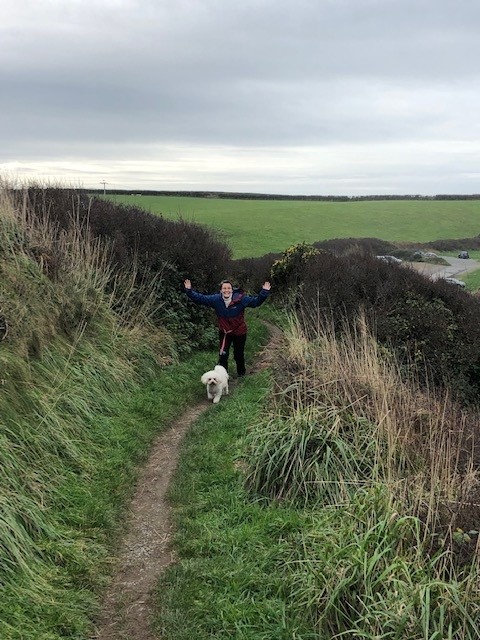
We chatted and shared a packed lunch in in the car park near the Helicopter landing pad used for ferrying people to Lundy Island. We were in awe of the place, even the incredible lighthouse setting, under reconstruction.
The swells were now roaring in. Neptune was awake. This coastline will now take me all the way down to Lands End 150 miles away.
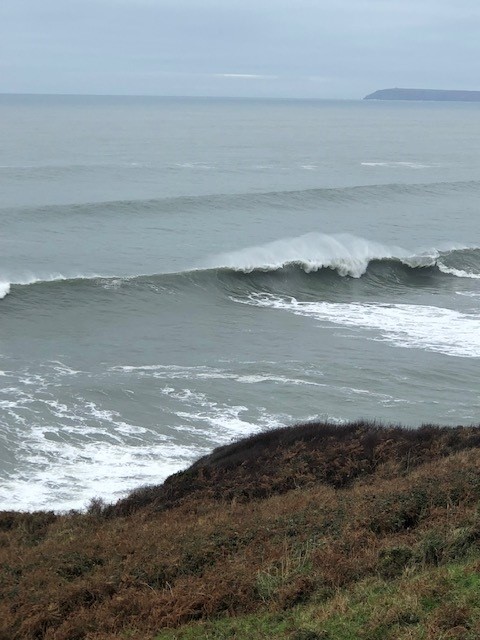
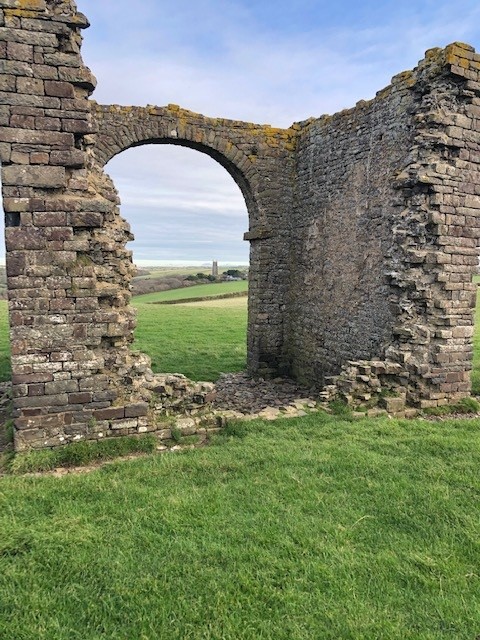
For the remainder of the walk my right ear was peeled to the breaking swell as the path now split booming waves and a softer cliff-top moorland known as the Warren. Here I was taken by a an old Folly tower that framed perfectly the 12th century St. Nectans Church a few miles away in the village of Hartland.
The walk was coming to an end. I headed down to Hartland Quay which is steeped in history dating back to Henry VIII and features in many blockbuster films from Treasure Island (1950) to the recent depiction of Daphne Du Maurier’s Rebecca (2020).
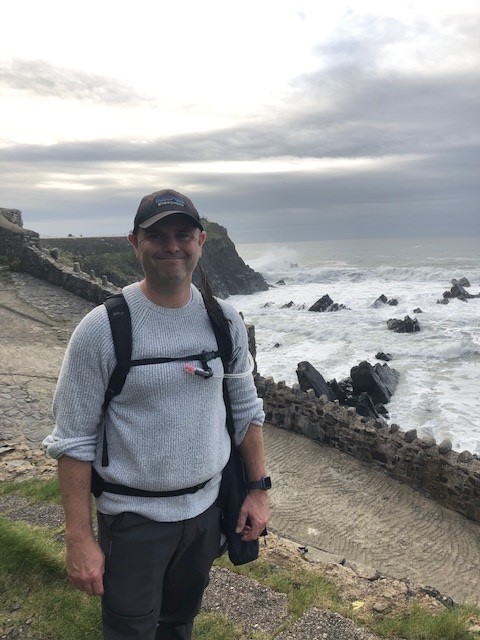
And I’m at the Cornwall border. The county of my birth. I have walked NW Somerset and North Devon
I’m so excited to walk the 320 miles around Cornwall. And so I’ve decided to do it all in one go, over 28 days in July 2022 having taken extended leave from the day job. So my blogs will be a little shorter (‘phew’ I hear you say). However before July (in the spring) I’ll be heading down to Plymouth and South Devon to pick up the south coast stages.
Finally, for the Cornwall walk I’d like to raise funds for Downs Syndrome Association UK as I spend most Thursdays looking after my little nephew Freddy who has taught me so much about what is really important and ‘why we care’.
I hope you will share with me this part of the walk where I’ll ponder and blog on the question ‘why walk?’ and ‘why care?’, all through the backdrop of the Duchy of Cornwall.
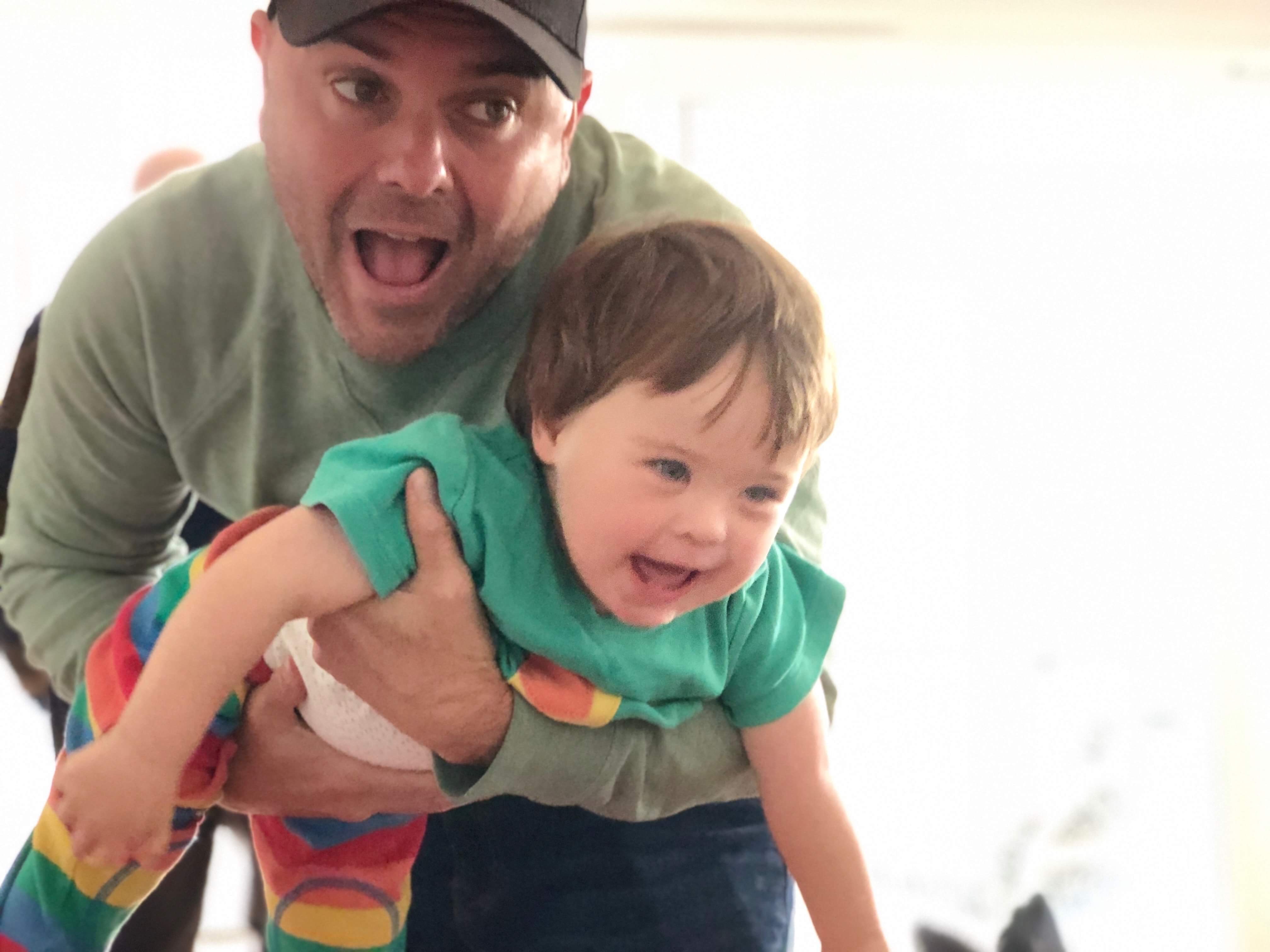
Gareth Dix, is a blogger, musician and surfer. He is currently walking the South West Coast Path where he shapes stories and reflections from the breathtaking surroundings, and the beautifully random people he meets. The walk is a sort of therapeutic pilgrimage drenched in heritage, humour and ham sandwiches. By day Gareth works with Active Devon and Sport England helping tackle inequality through sport and physical activity. Gareth believes the power of going for a walk can never be underestimated.
 Winging it well!